Interview with S.P. Miskowski
writing life, Seattle stories, rotting pumpkins

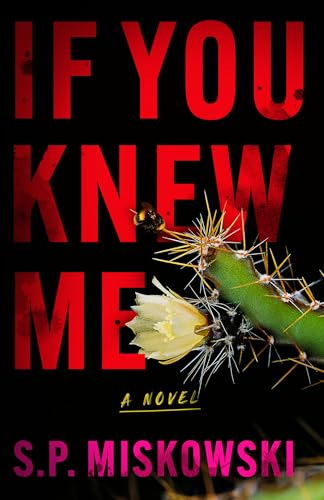
S.P. Miskowski is a legend, and she’s seen many trends come and go. I’ve been a fan since reading I Wish I Was Like You, about a wonderfully unlikeable Seattle ghost, and after her great recent thriller If You Knew Me, I had many questions. I’m grateful she answered!
Could you give us a rundown of your (extensive!) writing life thus far? Has your writing process changed over the years, or do you tend to keep the same habits and routines?
In college I studied psychology, anthropology, and English literature. I wrote short stories and a couple of them won prizes. Most of my work was published in small press magazines and a collection I put together received a National Endowment for the Arts Fellowship.
By that time I’d moved to a city where I didn’t know many people. I was publishing zines and chapbooks. William Burroughs was “on tour” and I saw him read a few times. In a writing workshop Kathy Acker told me I had a lot of voices instead of a central/omnipotent one, and maybe I should write plays. (The same week she told another writer in the workshop, Kathleen Hanna—whose flash fiction I had published—that she should start a band. The rest of that anecdote is Riot Grrrl history. Yay!)
A few years later I got another NEA Fellowship, this one for playwriting, and I earned an MFA from the University of Washington. So Kathy Acker’s advice was pretty good for me as well, though on a much smaller scale. Some of my plays were workshopped and/or had staged readings at theatres in Seattle, Rochester, New York City, and Las Vegas. Most of the plays I wrote were produced in Seattle by fringe theater companies and performed by wonderful artists. A lot of them are still close friends.
Eventually I quit writing plays. There were things I just wanted to try as a writer absent the physical reality of performance. My favorite plays were strange and poetic things by María Irene Fornés, Jeffery Jones, and John Jesurun. Some of the short fiction I loved came from people like Donald Barthelme. For some reason, in practice, I kept finding that people wanted me to write well-made plays or direct my own more experimental work and, frankly, it was driving me nuts.
On the advice of my agent, I offered an eBook edition of my debut novel Knock Knock in 2011. Kate Jonez read it and published the print edition at Omnium Gatherum Media. We were thrilled when the book was nominated for a Shirley Jackson Award. By then I was working on a set of three novellas related to Knock Knock, and OGM published all of them. The first, Delphine Dodd, was another SJA nominee. I’d love to say that’s when I knew there were readers who would enjoy my writing, and there was no need to wonder or worry, but it isn’t true. I still wonder if all of this is just me sitting on the floor in my room playing with paper dolls. Who knows?
Thanks to Joe Pulver and Laird Barron and some very generous small press publishers, I was invited to write stories for a lot of themed anthologies. To date I’ve contributed fiction to about forty-five books and magazines. And several small presses have created wonderful, illustrated chapbooks from my longer stories.
Getting published by JournalStone/Trepidatio was a milestone. They still offer my collection, Strange Is the Night, and two books set in the same fictional town as Knock Knock. The Worst Is Yet to Come and The Best of Both Worlds explore the lives of siblings engaging in weird practices aimed at raising the dead using natural and supernatural powers.
Last year I realized a long-time ambition to write a purely psychological horror novel. If You Knew Me was published by Thomas & Mercer. The attraction and the thing that kept me going through more than two years of writing was my fascination with people who lack self-doubt. As someone who’s experienced sometimes debilitating anxiety from an early age, I marvel at anyone who wakes up feeling great and proceeds to make life hell for everyone else. My monster is named Ann Mason.
My writing habits have changed over the years. I used to write at night after work, and on weekends. Somehow I still had a life. That’s the beauty of youthful energy. A few years ago I went through an unproductive phase of waiting for inspiration or the perfect sentence or some other excuse for not starting. Again, anxiety. What a waste of time! These days I shape fiction from weird little bits and pieces I’ve scribbled in a notebook, and I write to feel balanced, to feel okay.
I’ve read two of your great novels, I Wish I Was Like You and If You Knew Me, both set primarily in Washington State. I’m always interested in writers who write about real places they’ve lived. How have your fictional explorations of Washington affected your writing life and your local life?
You’re very kind. Thank you. Using Seattle as the backdrop for If You Knew Me was nostalgic for me. I loved that place, although I left it in 2008 to take a different tack. You know, it’s hard to make big changes to your life when you’re surrounded by friends and acquaintances (some very loving, some not so much) who want to tell you who and what you are.
I Wish I Was Like You is my portrait of Seattle in flux in the early 1990s. It’s been called “a poison-pen love letter” and “a vitriolic valentine” to the city. Those are apt descriptions.
I wanted to capture the sense of being a lost soul in the middle of whirlwind cultural and economic changes. What does it mean to be a ghost stuck in one place and yet displaced, unable to move on?
Some of my favorite J-horror and K-horror films and books influenced the novel but the main idea was this character who was envious and angry and unattached in life, becoming a ghost with the same malicious streak intact. It isn’t a redemption story.
Greta’s trying to find out who killed her. While she’s at it, she plays awful tricks on people. She goads them into self-destruction. She tells them (in a series of vignettes written in second person) that their fears are real and their sadness won’t end. She’s terrible, really, and her fate is to stay stuck where she is, never changing or moving or learning to love. I don’t think this fate is uncommon.
I was fascinated by the examination of fame and infamy in If You Knew Me. The protagonist is a journalist who wants her work to be widely known, and the antagonist is a sociopath who wants to be understood by a particular celebrity, and yet neither character wants to be known on social media. How does social media factor into this story?
Parker is twenty-five and wary of certain things her mother’s generation embraced. Ann Mason is obsessed with a TV series that was briefly popular in the early 1990s. In a way she’s trapped in that era. She knows how to use current tech but she uses it in odd ways. For example, a section of the book is a series of emails written to someone who doesn’t receive them. Each email is like an entry in a diary. Later on Ann has the idea to start audio-recording her actions in the present, to lend an immediacy to what she thinks will be a brilliant podcast about her fascinating life.
The reality of Ann can be construed by picking up stray comments by neighbors, former co-workers, and also people who have seen but not interacted with her. The reactions of other characters tell us what Ann seems like, as opposed to how she sees herself. Ann’s perception is that she’s the center of the universe.
Ann probably tried Facebook once and was instantly turned off by the way others tried to interpret her words. She’s happier writing journals. She has to control the narrative.
This is what goes wrong with Parker when the two women cross paths. Parker’s view of Ann includes interviews with people Ann has relegated to the past. Parker sees aspects of Ann that do not fit Ann’s delusions.
Ann wanted to be the subject of Parker’s article, but it necessarily involves giving up some control to Parker. Ann reacts by bolting, by trying to complete the story on her own terms. Then Parker will be forced to tell it as Ann lived it. Of course, this is also delusional.
What advice do you have for women just starting out in their writing careers? Have you observed any ways that the publishing landscape is different for women writers, particularly women in horror?
Women receive so much “helpful” unsolicited advice from people all the time, I have to preface this by saying take whatever rings true and ignore what doesn’t do you any good. Okay. Women, be yourselves and tell your stories. Unvarnished, imperfect, without striving to be what people pressure you to be in life.
There are many ways to write, many tips and tools that work well for one writer and not for another. My rule is this: If it makes you feel creative and alive, and you’re actually writing, use it. If it stops you from writing, especially if it makes you stop because you no longer feel confident enough, toss it out. No matter what it is. A manual. A word of advice. A workshop. A writer or a teacher you admire. Toss it out. Look for a better one and keep writing. You do not have to write flawless, pristine prose. Just go for it.
I could be wrong but I think the publishing landscape is pretty good for women right now. Horror is popular and fortunately a diverse generation of writers is creating a wide range of excellent fiction. Two novels side-by-side on a bookstore display can share similar themes and yet offer wildly different stories. I’d say if you love horror it’s a great time to be a reader.
How do you generally feel about your characters? Do you sympathize with your own villains? Do you leave the whole cast behind when the book or story is done, or do they follow you around sometimes? Which ones do you wish you knew in real life?
While writing I don’t think of a character’s actions or intentions as good or bad. I have no agenda. The story keeps developing and the characters keep revealing whatever they’re willing to reveal about their nature. Sometimes I look back at a complete story and think this or that character is pretty wild, or mean, or kind. I might accentuate these qualities a bit more once I recognize how the character affects the story.
Reader responses are interesting. Some readers think everything in a story is intentional. Some think nothing is intentional, it’s all automatic writing and the author is unwittingly providing a sort of blueprint for how their subconscious operates. There’s only a tiny bit of truth to both views.
I find it very fun and funny when someone has a big reaction to a fictional character. Of course we all do this. We cling to certain characters and despise others. But it’s hilarious when someone says, in a tone that suggests they think you’ve written it without realizing what you were doing, “This guy is a CREEP.” Or “This family needs therapy!” I say, “Yes, he is. Yes, they really do.”
One reader was really agitated by the way I wrote two “companion” books. The Worst Is Yet to Come and The Best of Both Worlds evolved as a short novel and a novella, and they’re interconnected. I’m still not sure but I think the reader felt it was some kind of writer ploy to make people buy two books instead of one. She just would not believe that the two stories developed in my imagination as separate yet closely related tales. Anyone who knows me well can tell you, I’m not business savvy enough to make readers or publishers do anything. My agent can confirm this. It’s a miracle she’s stuck with me for so long.
Who are some of your heroes?
I don’t have many because I don’t put a lot of (awfully fallible) humans on a pedestal. I expect we all fail at some time. But having said that, I still respect the civic-minded and compassionate approach Barack Obama took to being president. It isn’t a role for wannabe stars. It’s the highest-level civil servant job, and people who see it that way do a lot of good. Jimmy Carter had the right attitude. Probably the day Reagan had the Carter era solar panels torn off the White House roof, we took a bad turn toward self-aggrandizement and money over the common good. I would vote for Greta Thunberg for world diplomat if that were a thing. She’s carrying a banner for the core principle I learned first at my two years of bible school and soon after as an avid Star Trek watcher: “The needs of the many outweigh the needs of the few, or the one.” Yes, you can add Mr. Spock to my shortlist of heroes.
I admire many writers, choreographers, painters, filmmakers… But I take care not to expect them to be above the temptations of this world.
Why horror?
Here’s something I’ve been thinking about for a long time but have only now put into words. Horror is my girlfriend, my forever love, because horror is an affront to humanity’s misconceptions and self-delusions. The world tells itself it is “normal” and pretty and entitled to have nice things. Horror says, “Let’s remove these bandages and take a look, shall we?” Horror holds a mirror up very close, so close we can see all the pores and scars and the lines forged by fears we pretend not to have. Horror is as far from romance as you can get. It reminds us that the carriage is a rotting pumpkin and the dress is made from a torn tablecloth and if you don’t hurry home, all the fantasies you’ve collected around yourself will dissolve. We need heroic tales and romance and delusions, but we also need horror to keep us from becoming the self-involved monsters it portrays.